


Yes. You can point your domains at the platform and watch real reporting data come in before any commitment. Most teams have a full picture of who is sending as them inside the first week, which is usually enough to decide.

Engineered and hosted in the UAE
 Without Breaking Email
See every source sending as your domain, fix what is misaligned, and move to enforcement without breaking a single legitimate message.
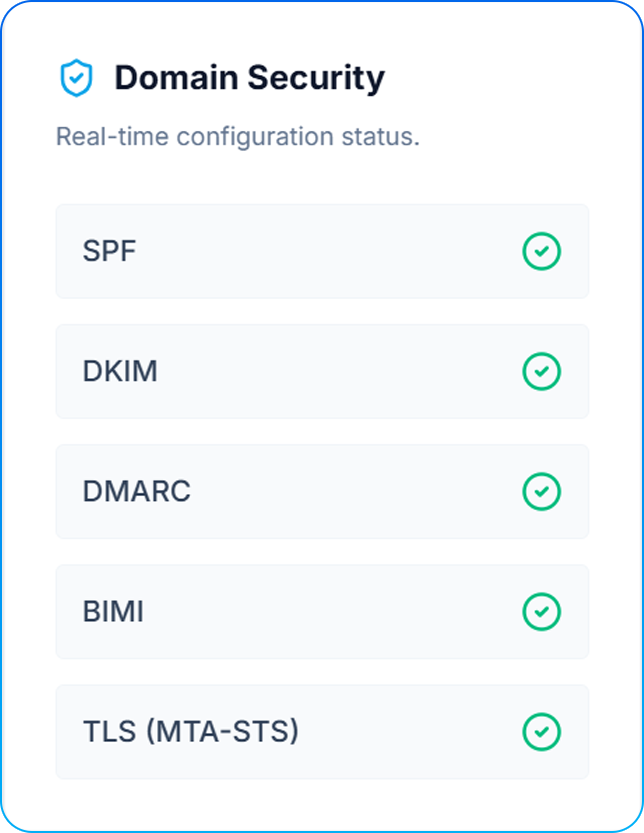
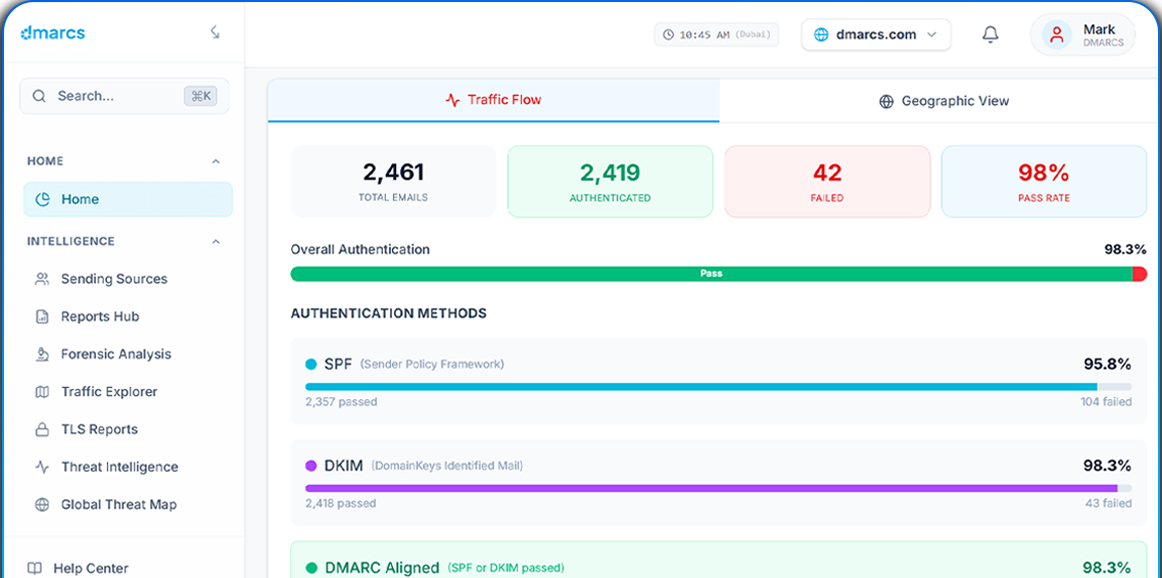
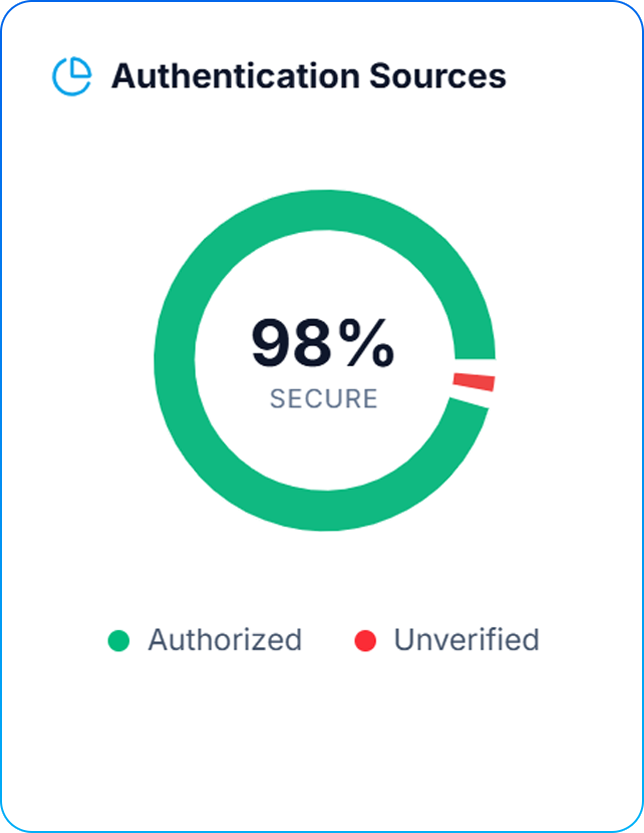




Find every service sending on your behalf, including the ones nobody documented, before you tighten policy.


Flatten bloated records, stay under the ten lookup cap, and add new senders without editing DNS by hand.


Move from monitoring to quarantine to reject on evidence, with a safety check before every policy change.



See which sources are spoofing your domain, where they operate, and how the pattern shifts from one week to the next.



Aggregate and forensic data turned into plain findings, so the next step is obvious without parsing XML.











Reporting and authentication data held in region, under local law.

The entire platform in Arabic, not a partial translation of the interface.

Spot third parties sending on your behalf with weak or missing alignment.

Every DNS change is checked against live sending data before it goes out.

Hundreds of domains and subdomains kept consistent under one policy set.

An assistant that reads your reports and tells you what to fix first.
For teams getting their first clear view of who is sending email as their domain.
 DMARC aggregate reporting
Forensic reporting
TLS reporting
Up to 5 domains
Standard support
DMARC aggregate reporting
Forensic reporting
TLS reporting
Up to 5 domains
Standard support
For teams ready to automate their records and push policy through to enforcement.
 Everything in Core
Smart SPF, DKIM and DMARC
Hosted BIMI and MTA-STS
Up to 10 domains
Advanced support
Everything in Core
Smart SPF, DKIM and DMARC
Hosted BIMI and MTA-STS
Up to 10 domains
Advanced support
For portfolios that need intelligence and third-party risk alongside enforcement.
Everything in Gold
DMARC AI analysis
AI report analysis
Third-party risk monitoring
Premium support
For organisations with their own security, procurement and data residency requirements.
Everything in Diamond
SAML single sign-on
Dedicated environment
Onboarding and migration support
Named technical contact



 Email authentication only. TLS, SMTP and header posture sit in another tool. Certificate expiry noticed when something already broke. Web and HTTP header security left entirely to someone else. Forgotten subdomains stay invisible until one is abused. Dangling DNS records sit unnoticed until they are taken over. Supplier and third-party domains are yours to chase. Lookalike domains surface when a customer reports one. Threat intelligence bolted on from a separate subscription. SPF and DKIM edits done by hand in DNS. Findings exported and reshaped before your SIEM can read them. Enforcement decisions you make alone. Reports you still have to decode yourself. Data stored outside the region, dashboards in English only.
 Email authentication and the domain surface around it, in one place. TLS certificate monitoring, with expiry caught in advance. Web and HTTP header security checked continuously. Subdomain discovery from certificate transparency logs. Dangling-DNS and subdomain takeover flagged before exploitation. Supplier and third-party domains tracked beside your own. Lookalike and typosquat detection running continuously. Malicious-IP and threat-intel feeds built in. SPF and DKIM records hosted and maintained for you. Native SIEM integration, a pull API and outbound webhooks. A guided path to p=reject, moved on evidence. Findings written in plain language. Held in the UAE under local law, with a full Arabic interface.
Still not sure where your domain stands? Talk to our team.
Yes. You can point your domains at the platform and watch real reporting data come in before any commitment. Most teams have a full picture of who is sending as them inside the first week, which is usually enough to decide.
It depends on how many services send on your behalf. Most organisations spend a few weeks at p=none while sources are identified and aligned, then step through quarantine to reject. We show you what is still failing at each stage, so the call is made on evidence rather than a calendar.
Not if the groundwork is done. The risk comes from enforcing before every legitimate sender is aligned. DMARCS keeps a live inventory of your sending sources and flags anything that would fail, so you only tighten policy once the data says it is safe to do so.
In the UAE. Authentication and reporting data stays in region, which matters for organisations working under PDPL and sector regulators. If your obligations require a specific jurisdiction, raise it during onboarding and we will confirm what is possible.
Yes. The full interface is available in Arabic rather than a partial translation. Regional teams can manage domains, read reports and action findings without switching language or relying on someone else to interpret the platform for them.














Tell us where your domains stand today and we will take it from there.